

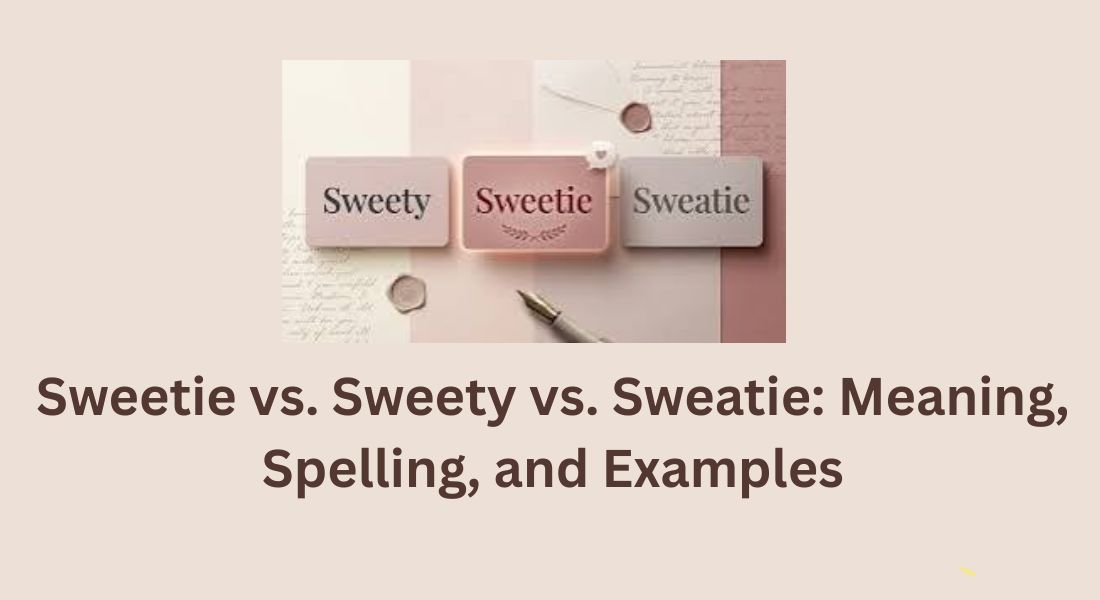
Have you ever typed sweetie in a message and wondered whether sweety or sweatie might be correct? These spellings look similar, so it is easy to mix them up when texting or chatting online.
The standard spelling is sweetie, which people use as an affectionate name for a partner, friend, child, or loved one. Sweety is a common informal spelling, while sweatie is usually a typo or a playful nickname.
Although the words look alike, they do not have exactly the same status in English. Here is how to tell them apart and use the right word in everyday conversations.
Sweetie vs. Sweety vs. Sweatie: Why These Spellings Confuse People
The main reason these words cause confusion is that sweetie and sweety sound almost the same. When people type quickly, they may choose the spelling that looks right to them.
Sweatie adds another layer of confusion because it resembles both sweetie and sweaty.
Here is a quick comparison:
| Word | Meaning | Usage |
| Sweetie | An affectionate name for someone | Standard spelling |
| Sweety | An informal variant of sweetie | Common in casual writing |
| Sweatie | Usually a typo or an invented nickname | Not a standard pet name |
| Sweaty | Covered in sweat or producing sweat | Correct English word |
If you are writing an article, school assignment, or professional message, choose sweetie when you mean an affectionate name. In personal texts, you may encounter other spellings, too.
Why English Spelling Creates Mix-Ups Like Sweetie vs. Sweety
English spelling can be tricky because words that sound alike do not always follow the same spelling patterns.
A few things make this particular spelling confusing:
- Similar pronunciation: Sweetie and sweety can sound almost identical when spoken.
- Familiar word patterns: Words such as beauty, pretty, and cutie may make sweety look like a natural spelling.
- Fast typing: People often send messages without checking every word.
- Personal writing styles: Some people prefer unusual spellings for nicknames or social media usernames.
These habits explain why you may see both sweetie and sweety online. However, if you want to follow standard English spelling, sweetie is the better choice.
Sweetie vs. Sweety: What Is the Real Difference?
Sweetie: The Standard and Correct Spelling
Sweetie is the standard spelling of this affectionate term. It comes from the word sweet and is used to express warmth, kindness, love, or closeness.
People commonly use sweetie when talking to a romantic partner, family member, child, or close friend.
Here are some examples:
- “Good morning, sweetie!”
- “Thank you for helping me, sweetie.”
- “Are you feeling better, sweetie?”
- “You did a great job, sweetie.”
The word can make a conversation feel warmer and more personal. However, its tone depends on the situation. Between partners, it may sound romantic, while a parent might use it to comfort a child.
It can also sound patronizing when someone uses it toward a stranger or speaks in a disrespectful tone.
Sweety: Is It Correct or Incorrect?
Sweety is a common informal spelling of sweetie. People use it in text messages, social media comments, and casual conversations, especially when addressing someone affectionately.
For example:
- “Good night, sweety!”
- “You are such a sweety.”
- “Thanks for always supporting me, sweety.”
Most readers will understand the intended meaning. However, sweety is not the standard spelling in edited English.
There is also a difference between a spelling mistake and a personal choice. Someone may intentionally use Sweety as a nickname, display name, or username. In that case, the spelling may be part of their personal style.
For everyday writing, though, sweetie is the preferred spelling.
Sweatie: What Does It Mean?
What Sweatie Actually Means
Sweatie is not a standard English term of endearment. If someone writes it in a message such as “You are such a sweatie,” they probably intended to write sweetie.
It may also be a playful nickname between people who know each other well. Its meaning depends on the context, so it is not always possible to tell whether it is a typo or an intentional choice.
For example:
- Intended message: “You are such a sweetie!”
- Possible typo: “You are such a sweatie!”
The second version may confuse the reader because it resembles sweaty, a different English word.
Sweatie vs. Sweaty: Understanding the Difference
The words sweatie and sweaty look similar, but their usage is different.
Sweaty is a standard English adjective that describes someone or something covered in sweat or producing sweat.
Examples:
- “I feel sweaty after running.”
- “He changed his sweaty shirt.”
- “It is so hot that my hands are getting sweaty.”
Sweatie, on the other hand, is not the standard spelling of either sweetie or sweaty. If you want to describe someone who is sweating, use sweaty. If you want to express affection, use sweetie.
A small spelling difference can change the meaning of your message.
Is Sweatie Ever Used as a Pet Name?
Yes, someone might use sweatie as a joke, a private nickname, or a playful spelling in a personal conversation. However, it is not a widely recognized pet name in standard English.
For example, two close friends might invent the word as an inside joke. That does not make it a standard spelling, but it can still have a personal meaning to them.
If you want other people to understand your message immediately, sweetie is the clearer option.
Pet Names in American English and Where Sweetie Fits
Why People Use Pet Names
Pet names are affectionate words people use instead of someone’s actual name. They can express love, care, comfort, or friendliness.
For example, a parent might say, “It’s okay, sweetie,” to comfort a child. A romantic partner might write, “Good night, sweetie,” before going to bed.
People also use pet names to make conversations feel less formal. However, not everyone enjoys being addressed this way, so it is important to consider the relationship.
Common Pet Names in American English
English has many terms of endearment. Some are mostly romantic, while others are common among family members or friends.
| Pet Name | Common Use |
| Sweetie | Partners, family members, and close friends |
| Sweetheart | Loved ones and family members |
| Honey | Partners and family members |
| Babe | Usually romantic partners |
| Darling | Romantic or affectionate relationships |
| Cutie | Someone considered cute or attractive |
| Buddy | Friends and informal relationships |
| Kiddo | Often used for children or younger people |
These meanings are not fixed rules. For example, one person might call a close friend honey, while another might use it only with a romantic partner.
Why Sweety and Sweatie Are Different
Sweetie is the standard spelling for this term of endearment. Sweety is a familiar informal variant, while sweatie is generally a typo or an invented nickname.
The difference matters when you want your writing to follow standard English conventions. It matters less in a private conversation where both people understand the intended meaning.
Still, using the standard spelling makes your message clearer and helps avoid accidental confusion with sweaty.
Where These Words Come From: The History of Sweet, Sweetie, and Sweety
The Origin of Sweet
The word sweet comes from Old English swēte, which described something pleasant, agreeable, or delightful. Over time, its meaning expanded beyond taste.
Today, sweet can describe food, a kind personality, a thoughtful action, or a loving gesture.
For example, “That was sweet of you” means that someone did something kind or considerate.
This broader meaning helps explain why sweet became a natural word for expressing affection toward another person.
How Sweetie Developed
Sweetie developed from sweet as an affectionate form of address. People use it to make a conversation sound more loving, gentle, or familiar.
English has other informal and affectionate words with similar endings, such as doggie and birdie. However, each word has its own accepted spelling.
Here are a few natural examples:
- “Thanks for checking on me, sweetie.”
- “Take care, sweetie.”
- “I missed you, sweetie.”
In each sentence, sweetie expresses affection rather than describing the person’s taste or appearance.
How Sweety Emerged
Sweety is widely seen as an informal spelling of sweetie. Its appearance may be influenced by pronunciation, casual typing habits, and the spelling of other familiar words ending in -y.
People may use it because they prefer how it looks or because they are accustomed to seeing it online.
However, frequent use in messages does not make it the standard spelling. In edited English, sweetie remains the preferred form for this meaning.
Context Matters: When to Use These Terms and When to Avoid Them
When to Use Sweetie
Sweetie is generally appropriate when you have a comfortable relationship with the person and know they welcome affectionate language.
For example:
- With a partner: “Good night, sweetie. Sleep well.”
- With a child: “It’s okay, sweetie. We will figure it out.”
- With a close friend: “Thanks for helping me, sweetie.”
- When offering comfort: “Don’t worry, sweetie. You did your best.”
The word can make a message feel warm and reassuring. Just remember that people have different preferences, even within close relationships.
When You Shouldn’t Use Pet Names
Calling someone sweetie can feel overly familiar when you do not know them well. Depending on the tone, it may also sound patronizing or disrespectful.
Be careful about using pet names when speaking to:
- A stranger you have just met
- A coworker you do not know well
- A customer or client
- A manager or professional contact
- Someone who has said they dislike affectionate names
In these situations, using the person’s name or a neutral greeting is usually a better choice.
For example, “Hello, Alex” is more suitable for a professional email than “Hi, sweetie.”
Recognizing the Fine Line
The same word can feel loving in one conversation and uncomfortable in another. Your relationship, tone, culture, and the other person’s preferences all matter.
Consider these examples:
- “Thanks, sweetie!” between close friends may sound friendly.
- “Listen, sweetie” during an argument may sound dismissive.
- “Hello, sweetie” from a stranger may feel too personal.
When you are unsure, use the person’s name and let the relationship develop naturally.
Choosing the Right Word: Practical Tips You Can Use Today
Spell It Correctly Every Time
If you want to address someone affectionately using standard English, choose sweetie.
Remember the difference:
- Sweetie: The standard affectionate term.
- Sweety: A common informal spelling variant.
- Sweatie: Usually a typo or an invented nickname.
- Sweaty: An adjective related to sweat.
Keeping these meanings separate will help you avoid spelling mistakes in messages and longer pieces of writing.
Avoid Sweety in Formal Writing
Sweety may be understood in casual messages, but sweetie is the preferred form when standard spelling matters.
Compare these examples:
- Informal variant: “Thank you, sweety!”
- Standard spelling: “Thank you, sweetie!”
If you are writing to a client, colleague, or manager, it is usually better to avoid pet names altogether. A simple greeting sounds more professional and respectful.
Treat Sweatie as a Possible Typing Mistake
Before sending a message containing sweatie, check whether you meant sweetie or sweaty.
For example:
- “You are such a sweetie” expresses affection.
- “You are so sweaty” describes someone who is sweating.
If you intentionally use sweatie as a private nickname, make sure the other person understands the joke. Otherwise, the standard spelling is less likely to cause confusion.
Etiquette Tips for Using Pet Names
A little consideration can help you use affectionate words naturally.
- Consider the relationship: Use pet names with people who are comfortable with them.
- Respect personal preferences: Stop if someone asks you not to use a particular name.
- Think about the setting: Professional conversations usually call for neutral language.
- Pay attention to tone: Even a friendly word can sound sarcastic or patronizing.
- Respect cultural differences: People have different expectations about affectionate language.
The goal is to make the other person feel comfortable, not to force a level of closeness they may not want.
Personal vs. Professional Examples
Here is how your wording can change depending on the situation.
| Situation | Recommended Wording | Why |
| Texting a partner | “Good morning, sweetie!” | Warm and affectionate |
| Comforting a child | “It’s okay, sweetie.” | Caring and reassuring |
| Messaging a close friend | “Thanks, sweetie!” | Friendly, if welcomed |
| Emailing a coworker | “Hi Alex, could you send the file?” | Professional and respectful |
| Contacting a client | “Hello, thank you for reaching out.” | Neutral and appropriate |
Choosing the right word involves more than spelling. It also means knowing when affectionate language fits the conversation.
Final Thoughts
When choosing between sweetie, sweety, and sweatie, the main difference is standard spelling and usage. Sweetie is the preferred spelling when you want to express affection. Sweety appears in informal messages and may be an intentional nickname, but it is not the standard form. Sweatie is usually a typo or a playful invention, while sweaty describes someone or something covered in sweat. If you want your writing to be clear, choose sweetie. Most importantly, use pet names in a way that feels natural and comfortable for the person receiving them.
FAQs
What Is the Correct Spelling: Sweetie or Sweety?
Sweetie is the standard English spelling for an affectionate name. Sweety is a common informal variant, but sweetie is preferred in standard writing.
What Does Sweatie Mean?
Sweatie is not a standard English term of endearment. It is usually a typo for sweetie or a playful invention, so its meaning depends on context.
Is Sweety Grammatically Correct?
Sweety is understandable in casual messages but is not the standard spelling of this term of endearment. Use sweetie in formal or edited writing.
When Should I Use Sweetie in Communication?
Use sweetie with a partner, family member, child, or close friend when the person is comfortable with affectionate language.
Is Sweatie Ever Used Affectionately?
Someone may use sweatie as a private joke or playful nickname. However, it is not a standard pet name, so sweetie is clearer.
